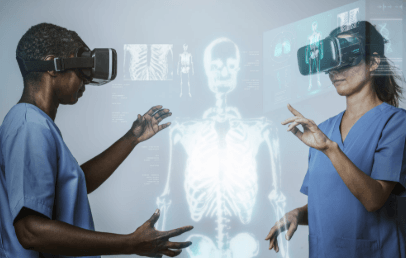
Smart devices are redefining healthcare delivery through continuous monitoring and rapid data collection. Real-time streams enable proactive interventions and personalized care, while interoperability and strong privacy protections support scalable analytics across populations. Wearables and sensors integrate with clinical workflows, enhancing decision support and resource optimization. As remote decision-making expands and telehealth reimbursement grows, the potential for coordinated, efficient care rises—yet challenges in integration, security, and equitable access underscore the need for further examination.
What Smart Devices Are Reshaping Care Today
Smart devices are increasingly integrating into care pathways, enabling continuous monitoring, rapid data collection, and remote decision support. These tools optimize workflows, empower autonomous decisions, and scale access.
Telehealth reimbursement models evolve alongside capability expansion, shaping adoption speed.
Data interoperability remains essential, ensuring seamless sharing across systems and devices, reducing siloed information and enhancing coordinated care delivery for diverse patient populations.
How Real-Time Data Fuels Proactive Care
Real-time data streams from connected devices enable a shift from reactive care to proactive management by continuously informing clinical decisions. Continuous monitoring supports early intervention, personalized treatment, and resource optimization, while reducing hospital stays and escalation risks.
However, data privacy concerns and device interoperability challenges must be addressed to sustain trust, ensure seamless integration, and unlock scalable, interoperable analytics across care ecosystems.
Integrating Wearables and Sensors Into Care Workflows
The integration of wearables and sensors into care workflows is redefining data capture, enabling seamless, continuous monitoring that informs decision-making across care teams.
This approach normalizes real-time signals, aligning clinician dashboards with patient states. Wearable metrics streamline trend analysis, while sensor reliability underpins confidence in alerts, prioritizing timely interventions and reducing noise for empowered, autonomous care decisions.
Evaluating Outcomes: Patient Engagement, Access, and Efficiency
How should healthcare systems assess the impact of digital health innovations on patient engagement, access, and efficiency? Robust metrics quantify engagement (adherence, portal use), access (wait times, virtual visits), and efficiency (cost per outcome, automation time savings). Data privacy and patient calibration guide interpretation, ensuring trustworthy insights and scalable improvements across modalities without compromising autonomy or security.
See also: How Smart Devices Are Transforming Retail Shopping
Frequently Asked Questions
How Secure Are Remote Health Monitoring Systems Against Cyber Threats?
Remote health monitoring systems show robust defenses, yet risk persists; data privacy hinges on strong encryption and access controls, while threat detection capabilities must evolve with novel attack vectors, ensuring continuous monitoring, rapid response, and transparent user empowerment.
What Training Do Clinicians Need for Device-Enabled Care?
Clinicians require structured training programs emphasizing device calibration, with clear emphasis on clinical competencies for remote monitoring. The approach blends ongoing skill assessment, interoperability literacy, and workflow integration to sustain safe, autonomous, device-enabled care.
Can Patients Control Their Own Data Sharing Preferences?
Yes, patients can control data sharing through consent settings, granular permissions, and clear dashboards; devices support preferences, revocation, and audit trails, allowing individuals to balance autonomy with care needs while maintaining transparency and security.
How Are Device Inaccuracies Managed in Critical Care?
Calibration acts as a compass; device inaccuracies are managed through rigorous protocols, continuous monitoring, and redundant sensors to protect data integrity. In critical care, calibration, alert thresholds, and independent cross-checks maintain trust while preserving clinician autonomy.
What Costs and Reimbursement Models Support Device Adoption?
Adoption relies on cost models and reimbursement pathways that balance upfront CapEx with ongoing OpEx, while clarifying data ownership and ensuring patient education; innovators stress scalable financing, policy alignment, and transparent value demonstrations to empower informed, freedom‑driven decisions.
Conclusion
In sum, smart devices act as quiet orchestral conductors, guiding care with precise, real-time signals. They translate streams of data into actionable insights, enabling proactive interventions before crises unfold. Wearables integrate seamlessly into workflows, reducing friction and elevating efficiency, while privacy and interoperability weave a trustworthy tapestry across systems. The result is a leaner, more responsive healthcare ecosystem—adaptive, scalable, and data-driven—where patient engagement and access are amplified, and outcomes steadily rise like a well-tuned cadence.